Pixel pitch is the single specification that most affects both the price and the visual result of an LED display project. Choose too fine a pitch and you pay for resolution nobody can see. Choose too coarse and text turns jagged, camera shots shimmer and the screen feels dated from day one. This guide walks through a practical way to choose — starting from the viewer, not the spec sheet.
What pixel pitch actually means
Pixel pitch is the distance, in millimetres, between the centers of two adjacent pixels. A P2.5 module places pixels 2.5 mm apart; a P6 module places them 6 mm apart. Smaller pitch means more pixels per square metre — and roughly exponential cost growth, because you are buying more LEDs, more driver ICs and more processing for every cabinet.
Two consequences follow. First, pitch determines the closest comfortable viewing distance. Second, it determines how much usable resolution you get on a given screen size. A 4 m × 2.5 m wall at P2.5 carries 1600 × 1000 pixels; the same wall at P5 carries only 800 × 500.
Start with viewing distance
The industry rule of thumb: minimum comfortable viewing distance in metres is roughly one to two times the pitch in millimetres. A P3 screen starts to look smooth from about 3–6 metres; a P10 screen needs 10–20 metres. Viewers standing closer than that threshold begin to see individual dots and the image falls apart.
Measure the real distance at your site — not the farthest seat, but the closest regular viewer. A church front row at 4 metres, a retail shopper at 2 metres and a highway billboard driver at 80 metres are completely different projects. The closest viewer sets the pitch ceiling; the budget sets how far below that ceiling you can go.
The resolution side of the equation
Content matters as much as distance. If your wall must show spreadsheet data or small text in a control room, you need enough physical pixels to render it — which pushes you to finer pitch even at longer distances. A lobby brand film, by contrast, tolerates a coarser pitch because motion and colour carry the message.
As a reference point: a true 1920 × 1080 canvas needs a wall of at least 4.8 m × 2.7 m at P2.5, or 3.84 m × 2.16 m at P2.0. If your wall is physically smaller than that, no controller trick can give you real 1080p — only scaling.
Indoor, outdoor and the brightness trade-off
Outdoor projects rarely justify pitches below P4 unless viewers stand within a few metres, because sunlight, not resolution, is the limiting factor. Money is usually better spent on brightness and weatherproofing than on finer pitch. Indoors, the reverse holds: brightness is easy, and close viewers make pitch the priority.
Common mistakes to avoid
- Buying resolution nobody sees. A P1.5 wall viewed from 12 metres looks identical to a P3 wall — at nearly double the cost.
- Ignoring the closest viewer. Designing for the average seat instead of the first row leaves part of the audience with a broken image.
- Forgetting content workflow. Ultra-fine walls demand native high-resolution content. If your marketing team only produces 1080p assets, plan the canvas accordingly.
- Comparing pitch without comparing quality. Two P2.5 walls can differ enormously in LED bin quality, driver IC refresh and calibration. Pitch is necessary, not sufficient.
A simple decision framework
Answer three questions and the pitch usually chooses itself: How close is the nearest regular viewer? What content must be legible? What is the realistic budget per square metre? Bring those three answers to your supplier and ask for two candidate pitches with side-by-side demos. Reputable manufacturers will demo both rather than push the more expensive option — because the right pitch is the one your viewers never think about again.
Worked examples
Retail storefront, 3 m × 2 m, shoppers at 2–4 metres. The closest viewer rules out anything coarser than about P2.5. A P2.0–P2.5 wall delivers a smooth image at arm’s length and enough pixels (around 1500 × 1000 at P2.0) for crisp promotional video. Going finer than P1.8 here spends budget on pixels nobody will ever resolve.
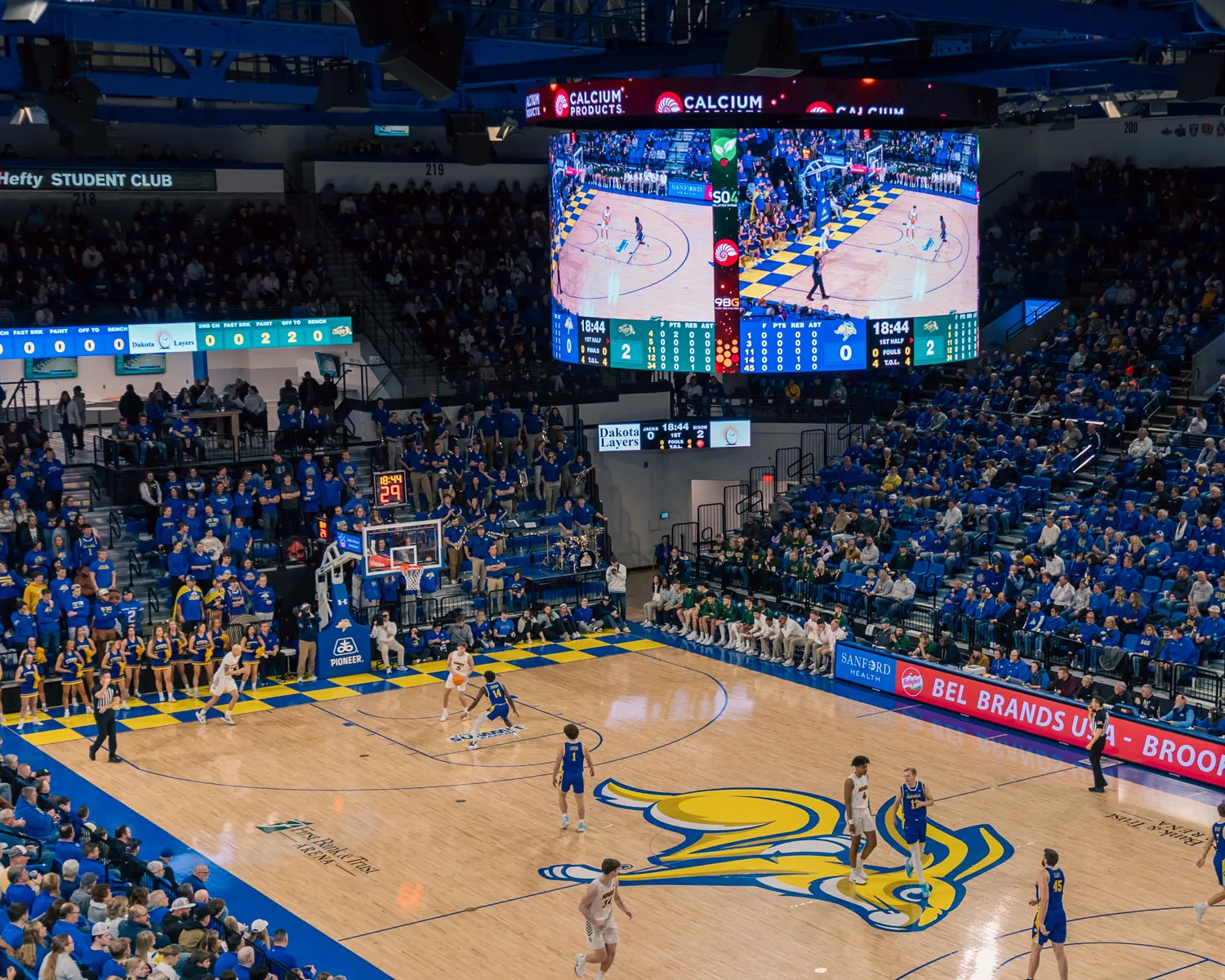
Conference hall main stage, 8 m × 4.5 m, first row at 6 metres. P2.5–P3.0 satisfies the front row with margin, and the large canvas still provides roughly 3200 × 1800 pixels at P2.5 — comfortably above 1080p for native presentations. This is the sweet spot where resolution and cost balance.
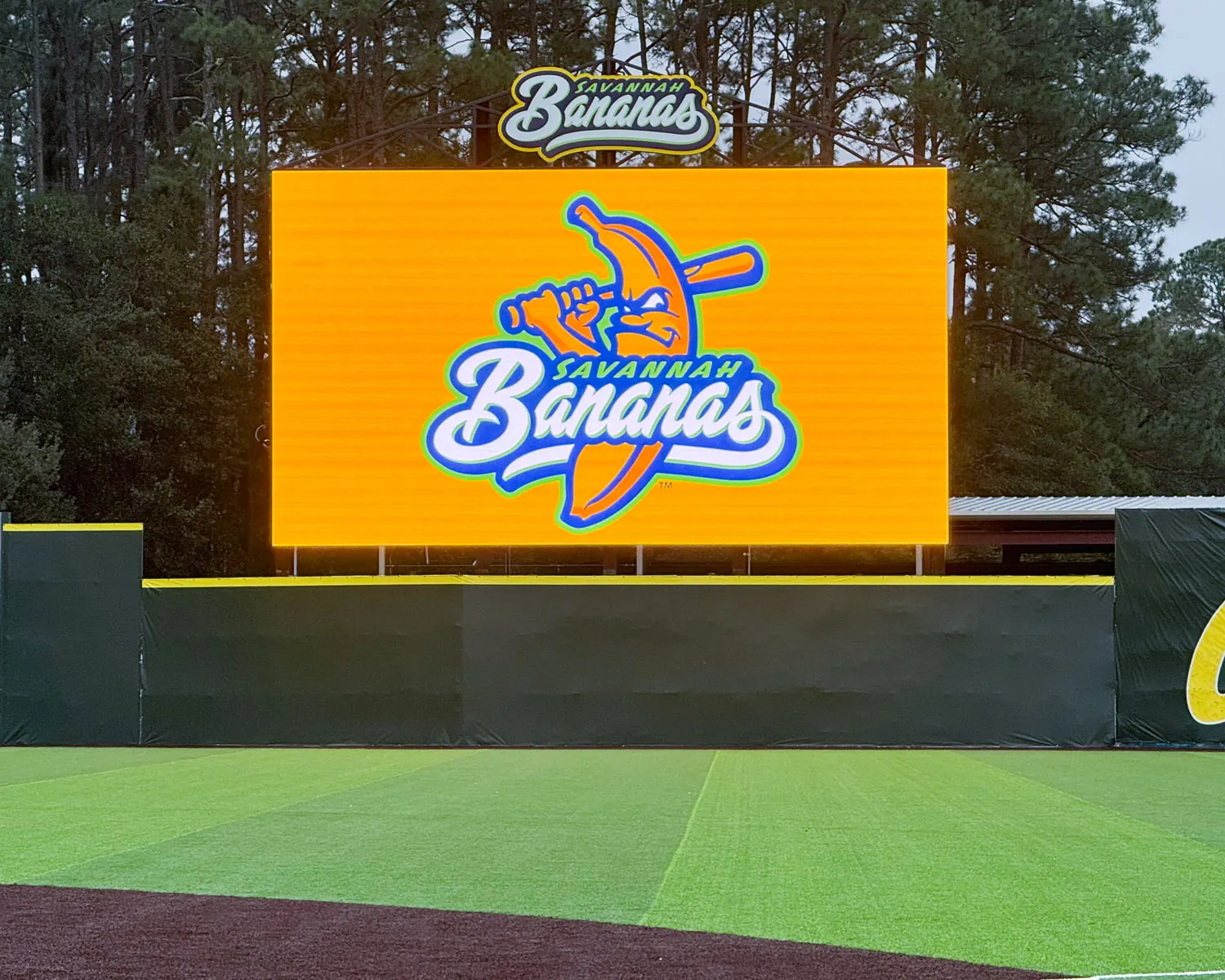
Roadside billboard, 12 m × 6 m, drivers at 60+ metres. Pitch is almost irrelevant to the viewer; P6–P8 is indistinguishable from P4 at that distance. Budget belongs in brightness, weatherproofing and LED quality, not in finer pitch.
Questions to ask your supplier
- What pitch do you recommend for my closest viewer, and what is the second-cheapest acceptable option?
- Can I see both candidate pitches side by side, showing my actual content?
- At this pitch, what native resolution will my exact wall dimensions produce?
- How does the price scale if I move one pitch step finer or coarser?
Suppliers who answer these questions with measurements and demos — rather than a push toward the finest pitch in stock — are the ones worth building a project with.
Quick reference: pitch vs. viewing distance
| Pixel pitch |
Closest comfortable viewer |
Typical application |
| P1.8 – P2.0 |
2 – 4 m |
Retail storefronts, lobbies, control rooms |
| P2.5 |
3 – 6 m |
Conference halls, retail walls, houses of worship |
| P3.0 – P3.9 |
3 – 8 m |
Stages, larger halls, rental events |
| P4 – P5 |
4 – 10 m |
Outdoor facades viewed at close range, large venues |
| P6 – P8 |
10 – 20 m |
Billboards, stadium perimeters |
| P10+ |
20 m+ |
Highway and rooftop billboards |
Common questions
Is a finer pitch always better?
No. Below the resolution your closest viewer can perceive, extra pixels are invisible. A P1.5 wall viewed from 12 metres looks identical to a P3 wall at nearly double the cost. Match pitch to the closest regular viewer, not to the finest spec available.
How big must my wall be for real 1080p?
A true 1920 × 1080 canvas needs at least 4.8 m × 2.7 m at P2.5, or 3.84 m × 2.16 m at P2.0. On a physically smaller wall the controller can only scale — you will not gain genuine resolution.
Does outdoor need the same pitch as indoor?
Usually not. Outdoors, sunlight — not resolution — is the limiting factor, and viewers stand farther away. Budget is almost always better spent on brightness and weatherproofing than on pitch finer than P4.
Talk to us about your project
Every project in this guide starts with the same step: a conversation about your site, your content and your budget. Explore the Pure Light series to see how we build for this application, or contact our engineering team for a specification review and a side-by-side demo proposal.
 TL Traveling LightRental & Touring LEDP1.25 – P3.91
 BL Beam LockRental Hard-Connection LEDCable-free hard connectionIndoor Fixed LED→
 SG Steady GlowIndoor Fixed LEDP1.25 – P4.0
 PL Pure LightIndoor Fixed Hard-Connection LEDCable-free hard connectionCOB Fine Pitch LED→
 OG Obsidian GlowCOB Fine Pitch LEDCOB · flip-chipView all product series →Not sure which series fits your project? Get a Recommendation →